
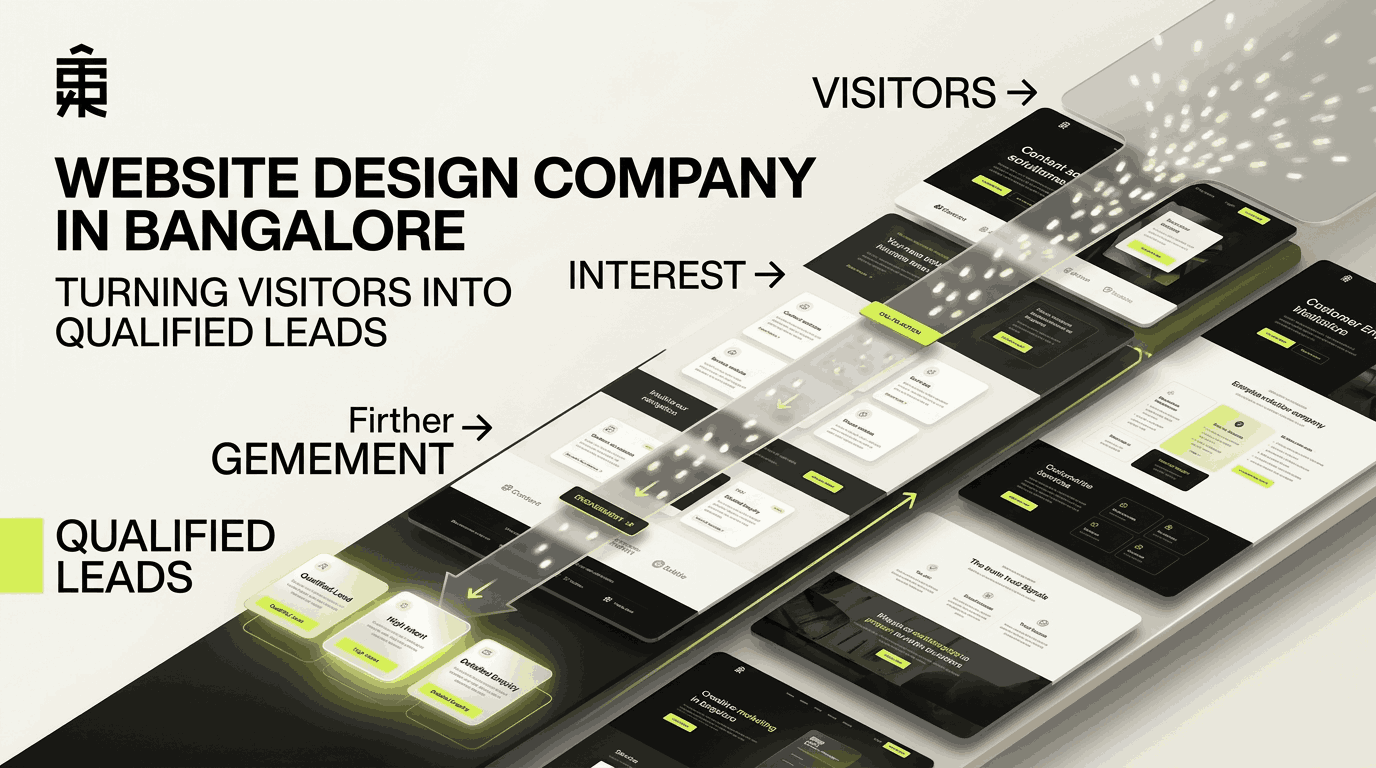
A website can attract plenty of visitors and still fail to generate meaningful enquiries. The real challenge begins after someone lands on the page. They need to quickly understand what the business offers, decide whether it is relevant to them, find enough proof to trust the company and know exactly what to do next.
For businesses competing online, a Website Design Company in Bangalore should therefore think beyond colours, layouts and visual appeal. The website needs to guide visitors through a natural decision-making process, from the first interaction to the point where they feel confident enough to enquire.
At THE STRATUP, this means connecting website strategy, user experience, content, SEO and conversion thinking. A good website should not simply bring traffic. It should help turn relevant traffic into genuine business opportunities.
Turn Website Traffic Into Real Enquiries With Better Page Journeys Now
Traffic is only the beginning of the customer journey. Imagine someone searching Google for a service and clicking through to your website. They have already shown some level of interest, but that does not mean they are ready to contact you immediately.
The page needs to continue the conversation started by their search.
If the visitor finds a clear headline, relevant information, supporting proof and an obvious next step, they have a reason to stay. If they instead encounter vague messaging, crowded navigation or generic content, the journey can end almost instantly.
This is why a Website Design Company in Bangalore needs to think about what happens before and after every click. The goal is to create a sequence where each page answers the visitor’s current question while naturally leading them toward the next one.
Give Each Visitor a Good Reason to Continue Exploring Your Website Now
- Early-stage visitors may need educational content, simple explanations and relevant examples before they understand the service.
- Visitors comparing providers may look for testimonials, case studies, experience and clear service details.
- Decision-ready visitors may want quick access to a consultation, enquiry form, phone number or other direct CTA.
- Clear content hierarchy helps visitors find the information they need without navigating through unnecessary pages.
- Simple navigation and descriptive headings make the journey easier to follow and encourage visitors to continue exploring.
- Logical page connections can guide users naturally from an initial service page toward supporting information and eventually to an inquiry.
Match Landing Page Content With the Intent Behind Every Search Visit In
A landing page should reflect the reason someone arrived there.
If a visitor searches for a specific service, sending them to a generic homepage creates unnecessary friction. They may have to search through the site again to find the information they were originally looking for.
A better approach is to create landing pages around specific customer needs and search intent.
The page can introduce the service, explain its value, demonstrate relevant experience, answer common concerns and provide a suitable CTA. This creates continuity between the search query and the website experience.
For THE STRATUP, this connection is important because qualified leads are more valuable than simply increasing visitor numbers. A smaller audience with strong relevance can often create better opportunities than a much larger audience with little interest in the service.
Make Service Pages Do More Than Explain What Your Business Can Offer
Many service pages stop after describing the service. That leaves potential customers with unanswered questions.
A stronger page considers the complete decision process.
It can explain the problem the service addresses, who it is suitable for, what the process involves, what makes the approach different and what the visitor can expect after making contact.
This gives the visitor useful context before asking them to take action.
For example, a service page for a complex B2B solution may need more detail than a simple local service page. The content should match the level of consideration involved in the purchase.
This is one area where a Website Design Company in Bangalore can bring design and content together. Layout, copy, visuals and CTA placement should reinforce the same message rather than functioning as separate elements.
Remove Frictions That Quietly Stop Visitors From Taking Action Today Up
Sometimes the problem is not a lack of interest. It is friction.
A visitor may want to enquire but face a form with too many fields. They may struggle to find a phone number. A CTA may blend into the page. Navigation may force them to return to the menu repeatedly.
These details can quietly reduce conversions.
Review the journey from a visitor’s perspective. Can they find the relevant service quickly? Is the next action obvious? Does the form ask only for information that is genuinely necessary? Can mobile users tap buttons comfortably?
Removing small obstacles can make the overall experience considerably smoother.
Measure Visitor Actions to Find the Pages That Need Better Conversion!
Look at how visitors actually behave. Which pages attract organic traffic? Where do visitors leave? Which CTAs receive clicks? Which landing pages generate enquiries? Are users starting forms but abandoning them?
For example, a service page receiving substantial search traffic but very few enquiries may have a conversion problem. Its content may need stronger proof, a clearer value proposition or a more relevant CTA.
Useful metrics include:
| METRIC | WHAT IT CAN REVEAL |
|---|---|
| Landing-Page Visits | Which pages attract potential customers |
| Engagement | Whether visitors find the content relevant |
| CTA Clicks | Where visitors show conversion interest |
| Form Starts | Initial enquiry intent |
| Form Submissions | Actual lead generation |
| Conversion Rate | Overall page effectiveness |
This makes optimisation more practical because changes can be based on real user behaviour.
Build Continuous Improvements Into Your Website Growth Strategy Today!
A website should not be treated as finished simply because it has launched.
Customer expectations change. Search behaviour changes. New services are introduced. Competitors improve their digital experiences. Analytics can also reveal opportunities that were impossible to see before launch.
That makes ongoing optimisation valuable.
THE STRATUP can approach a website as an evolving business asset rather than a one-time design project. New landing pages can be developed around emerging search opportunities, underperforming pages can be refined, and successful content can be expanded into stronger conversion journeys.
The process becomes continuous:
Launch → Measure → Identify gaps → Improve → Test → Repeat
This mindset helps a website remain useful as the business grows.
Choose Customisation Based on Real Requirements
Customisation should solve a problem, not simply sound impressive.
A Custom Web Design Company in Bangalore can be particularly useful for businesses that need unique functionality, specialised customer journeys, distinctive branding or integrations with other systems.
However, not every business requires a completely bespoke platform.
The decision should consider:
- Business objectives
- Number of pages
- Content complexity
- Required functionality
- Integration requirements
- Future scalability
- Budget
- Maintenance requirements
A template can be perfectly suitable for one business and completely restrictive for another.
The right solution is the one that supports the business without creating unnecessary complexity.
Conclusion
Turning website visitors into qualified leads is not about adding more buttons or making a homepage look more impressive. It is about creating a journey that feels relevant from the first click through to the final enquiry.
A Website Design Company in Bangalore with a conversion-focused approach can bring strategy, content, UX, SEO, trust and measurement together to make that journey more effective.
For THE STRATUP, the objective is simple: build digital experiences that do more than attract attention. They should help the right visitors understand the offer, gain confidence in the business and take the next step.
When every page has a purpose and every interaction supports the customer journey, a website can become much more than an online presence. It can become a consistent source of qualified business opportunities.